
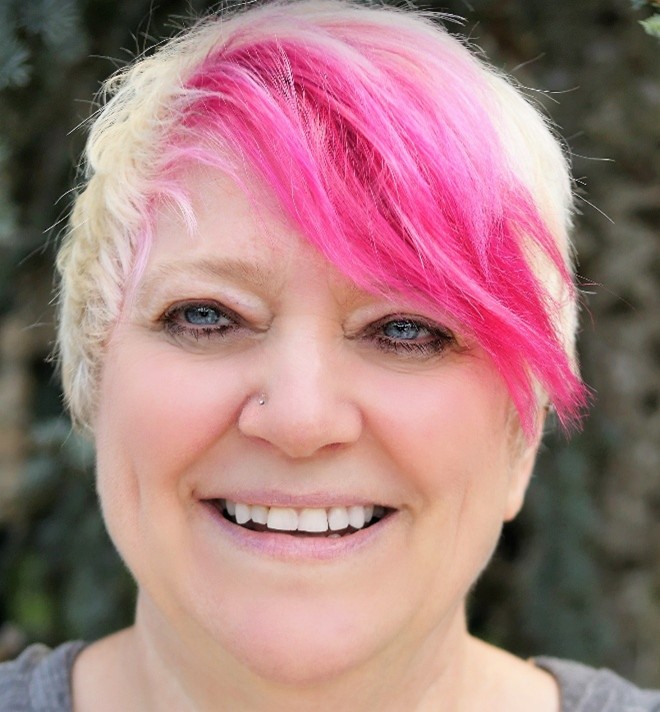
Dana Yarbrough
Virginia’s Title V Family Delegate | Director of the Family to Family Health Information Center, funded by the Health Resources and Services Administration (HRSA)’s Maternal & Child Health Bureau (MCHB).
In early 2025, Dana began working with a young Chickahominy Tribal member with disabilities/special health care needs. For ten months, they met monthly to collaborate on building stronger connections between the Family to Family Health Information Center and the Tribe. Dana’s work included:
- Learning from the cultural brokers serving Latinx, Black, Arabic, refugee, and immigrant communities;
- Polling Chickahominy families of children and youth with special health care needs (CYSHCN) about training needs;
- Coordinating a meeting with the Tribal Ombudsman in the Secretary of the Commonwealth’s office;
- Presenting to Virginia LEND trainees; and
- Planning two virtual trainings for Tribal families.
While this partnership has been supported through a contract, Dana plans to advertise a dedicated Tribal Cultural Broker position in early 2026.
As we get closer to our 2026 AMCHP Annual Conference and continue exploring what you can expect as part of our conference’s Indigenous Experience, we connected with Dana for a partner spotlight on Indigenous and community partnerships in maternal and child health. Dana shared about her work, the meaning of this year’s conference theme in the context of the communities she partners with, and the lessons and opportunities that have and continue to emerge from these partnerships.
To learn more about the Family to Family Health Information Center, please visit their website.
To start, could you introduce yourself to the AMCHP conference audience and the work you lead as Virginia’s Title V Family Delegate and the Director of the HRSA/MCHB-funded Family to Family Health Information Center?
My name is Dana, and I serve as Virginia’s Title V Family Delegate and as the Director of the HRSA/MCHB-funded Family to Family Health Information Center, roles I’ve held for 15 and 20 years, respectively. In these roles, I work alongside families of CYSHCN to help them navigate systems, access information, and build confidence and skills to advocate for what their children and families need. I also come to this work as a parent of a young adult daughter with intellectual, physical, and sensory disabilities and complex health care needs. This experience shapes everything I do by keeping me grounded in what families face every day and in the importance of centering their voices in systems that affect their lives. Whether through Title V or our Family to Family Health Information Center, my focus has always been on building connection and leadership—supporting families not only to receive services, but to become leaders and partners in shaping more responsive, fair systems for all families.
This year’s AMCHP theme is “The Power of Connection.” When you think about your work and the communities you partner with, what does that phrase mean to you?
Amanda Holmes
For me, “The Power of Connection” means moving beyond good intentions to build relationships that change what is possible for families and systems. In early 2025, I began working with Amanda Holmes, a young Chickahominy Tribal member with disabilities. What started as a contract became a living example of how connection builds trust, capacity, and new pathways. Over ten months, she helped bridge our Center with her community—learning from cultural brokers serving Latinx, Black, Arabic, refugee, and immigrant families; gathering input from Chickahominy families of CYSHCN; and bringing tribal perspectives into state and training spaces. Those connections didn’t just share information—they reshaped relationships and revealed what was missing. That is the power of connection: when relationships create lasting change.
The Indigenous Experience Conference Planning Subcommittee is featuring examples of Indigenous and community partnerships in maternal and child health. Can you share the role of partnerships in your work as Virginia’s Title V Family Delegate and Director of the HRSA/MCHB-funded Family to Family Health Information Center? What sparked the partnership with a Chickahominy Tribal member? What needs or hopes continue to guide the relationship?
Partnership has always been at the heart of my work as Virginia’s Title V Family Delegate and Director of the Family to Family Health Information Center. Since 2009, our Center has been intentional about reaching beyond traditional systems to ensure families of children and youth with special health care needs—across race, culture, language, and geography—can access trusted, culturally grounded support. That commitment led us to build a cultural broker initiative that centers people’s experience and community connection as the foundation for engagement. The partnership with a Chickahominy Tribal member grew out of that same commitment. I recognized that Indigenous families were largely invisible within our statewide family support network, and that we needed to listen and learn directly from Tribal communities rather than assume we understood their needs. This partnership began not with a program, but with a relationship—creating space for a Tribal self-advocate to explore how her community might want to connect with our Center and with broader maternal and child health systems. What continues to guide this relationship is a shared hope that Tribal families of CYSHCN will feel seen, respected, and supported in ways that honor their culture, sovereignty, and priorities. We are working toward building trust, strengthening advocacy capacity, and creating pathways that allow Indigenous families to access resources without losing their voice or identity. That long-term vision is what makes this partnership meaningful and sustainable.
What have you learned through this partnership—about relationship-building, honoring community priorities, or supporting Tribal families of CYSHCN?
This partnership has reminded me that meaningful relationship-building takes time, patience, and a willingness to move at the pace of the community, not the system. I learned that trust grows when we listen deeply, follow through, and create space for people to shape both the process and the priorities. Supporting this Chickahominy self-advocate meant resisting the urge to rush toward outcomes and instead focusing on building her confidence as an advocate and connector for her community. Honoring Tribal families of CYSHCN requires being present, staying curious, and allowing community voice to guide the work. When we do that, the results are not just stronger programs, but stronger people and relationships that last.
What opportunities have emerged from this partnership?
This partnership has already opened doors that would not have been possible without a trusted Tribal relationship. Through this self-advocate’s leadership, I was introduced to the Tribal Ombudsman in the Secretary of the Commonwealth’s office, creating a direct pathway between Tribal families of CYSHCN and state-level advocacy and problem-solving. I also co-presented recently to five Chickahominy families, which we hope will grow into an ongoing series of virtual gatherings led by and for Tribal families. These opportunities are about more than meetings or trainings—they are about creating spaces where Indigenous families can access information, share their experiences, and build confidence as advocates in ways that feel safe and culturally grounded. The most important opportunity is the one that continues to grow: a relationship strong enough to support sustained connection, learning, and trust between Tribal families and Virginia’s maternal and child health systems.
Partnerships with Indigenous leaders and communities require trust, care, and respect for sovereignty. What practices have helped you show up well as a partner?
What has mattered most in this partnership is showing up with humility, consistency, and a willingness to listen more than I speak. I’ve learned that trust grows when I move at the pace of the Chickahominy community, follow through on what I promise, and create space for Indigenous and Tribal members to shape both the goals and the process. Practicing cultural humility means recognizing that the Chickahominy families are the experts in their own experiences and that sovereignty and self-determination must be respected at every step. And compassionate engagement looks like being present, staying curious, and allowing relationships to guide the work rather than rushing toward outcomes. That approach has helped me to hopefully build a partnership grounded in respect, care, and shared purpose.
Looking ahead, what are your hopes for the continued or expanded work with local communities? (such as the Tribal Cultural Broker role)
Looking ahead, my hope is that this work continues to grow in ways that are guided by Tribal communities themselves. I am planning to hire a Tribal Cultural Broker so that this partnership is not dependent on any one person but becomes part of how our Center and Title V systems engage with Indigenous families of CYSHCN. Over time, I hope this role will support connections not only with the Chickahominy Tribe, but with other Tribal nations and Indigenous communities across Virginia—creating pathways for families to access information, training, and advocacy in ways that honor culture, sovereignty, and community priorities. The goal is not to scale quickly, but to build relationships that are strong, trusted, and lasting.
Is there anything you’d like conference attendees to reflect on as they think about building authentic partnerships in their own states or communities?
I would invite conference attendees to reflect on the power of building relationships that grow over time. Authentic partnerships with Tribal nations and Indigenous communities are rooted in listening, mutual respect, and a willingness to walk alongside one another as priorities and needs evolve. When we invest in relationships—not just activities—we create space for trust, shared learning, and lasting impact for families. My hope is that people leave thinking about how they can nurture partnerships that are reciprocal, meaningful, and built to last.
